Noiser
What the Vikings Left the World
Play Real Vikings 1. Murder on Chesil Beach
When you think of Vikings, you might picture longships, axe-wielding warriors, and monasteries in flames. But while all of these things are true, the Norse legacy is far more surprising than popular legend might suggest. Here are some of the lesser-known things the Vikings left behind…
Bluetooth
In 1997, Silicon Valley in California was the epicentre of the tech boom. Companies were racing to shape the digital future. At Intel, engineers were developing a short-range wireless technology to connect devices without cables.
Intel’s CEO, Jim Kardach, gave the technology a codename: Bluetooth. He found it in a historical novel called The Long Ships, by Frans T. Bengtsson. The book features the legendary Viking king Harald Gormsson and highlights Harald’s ability to bring people together.
Harald Bluetooth claims he built monuments in memory of his parents and that he united all of Denmark and Norway. Archaeology has largely supported this claim.
Davide Zori, Associate Professor of History and Archaeology at Baylor University
Harald’s nickname, “Bluetooth” (likely referring to a decaying incisor), stuck in Kardach’s mind. The king had united warring factions; this new technology would unite burgeoning smartphones.
When Kardach floated the name to colleagues, it was met with silence. Bluetooth, he reassured them, was only temporary… a placeholder until marketing came up with something better.
They never did.
The name stayed. And so did the logo: a clever fusion of two runes representing Harald’s initials.
Language
If you speak English, you are speaking a little Old Norse every day.
When Vikings settled in England, their language blended with Old English.
There are everyday nouns like lad, sky, fellow, husband, yule, window, foot, bug, oaf (which translates to “elf”) and countless more besides. Even the days of the week bear their imprint. Tuesday to Friday are named for Norse gods (or their Anglo-Saxon equivalents): Tyr, Odin, Thor and Frigg.
If you ate an egg for breakfast this morning, you have the Vikings to thank for the word egg. If you died, you have the Vikings to thank for the word that tells you that you have died.
Pragya Vohra, Lecturer in Medieval History, University of York
Then, there are harsher words, associated with raiding, which tell us a little more about the Vikings - keel, starboard, berserk, ugly, skull, knife, slaughter, ransack, club…
Place names tell the story, too.
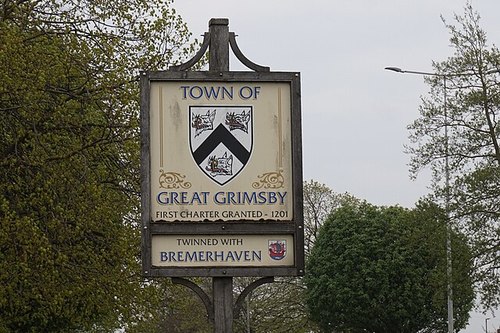
- The suffix -by (Derby, Grimsby, Whitby) means “town.”
- -thorpe (Scunthorpe, Mablethorpe) means “settlement.”
- Thingwall on the Mersey, like Tingwall in Shetland, marks the site of a Norse assembly - a “thing”. The word also lends itself to the Isle of Man parliament, Tynwald.
 The Viking Age may have ended a millennium ago, but its vocabulary did not.
Democracy
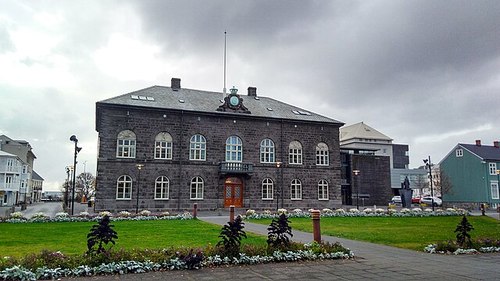
In present-day Reykjavik, a modest two-storey stone building stands. The unassuming structure is the seat of the Icelandic government, the Alþingi (Althing). Founded in 930, the Althing holds a unique distinction - it is the oldest democratic parliament in the world.
Originally, it did not meet in the city at all. It gathered thirty miles away at Thingvellir (Assembly Fields), a valley sitting at the intersection of the North American and Eurasian tectonic plates.
For two weeks every June, free men from all over Iceland would assemble to discuss land disputes, grazing rights, feuds and grievances. It was presided over by a lawspeaker who, along with his council, passed judgments according to a set of principles known as the Grey Goose Laws, so called because of the quill that was used to pen them.
There was even a rudimentary welfare system in some communities, known as hreppur, designed to support those struck by hardship.
Legacy
The Vikings certainly reshaped Europe through violence and expansion. But they were also traders, lawmakers, shipbuilders, storytellers and settlers. They connected continents through trade routes, with their influence spanning from North America to Baghdad. They left sagas that still influence literature. They embedded their language in ours.
And they gave a wireless technology the name of a king with a bad tooth.
The Vikings were not just destroyers.
They were connectors.
And their world, in many ways, is still ours.