
Noiser
Five Incredible Facts About the London Underground
Play Short History Of... The Cuban Missile Crisis, Part 1 of 2
The London Underground is central to the city’s identity, as iconic as Big Ben or Tower Bridge. A pioneering feat of engineering at the time of its construction in the 19th century, on a typical weekday, the network now carries 5 million passengers between 272 stations, on 11 different lines, over a total of 250 miles of track.
Here are 5 incredible facts…
A Key Figure
In the mid-19th century, London was a city of 2.5 million people, bursting at the seams. With hundreds of thousands travelling into the city centre for work every day, the roads were clogged with a stinking mass of pedestrians, wagons, omnibuses, coaches – and, of course, horses that paved the streets with manure. The arrival of steam trains only added to the slow-moving chaos.
One man believed the solution lay beneath the cobbles: Charles Pearson.
His early ideas involved trains being pulled around subterranean tracks by atmospheric pressure, eliminating the smoke and steam produced on conventional railways.
His vision was often ridiculed. To some Victorians, the idea of an underground railway – funnelling people down into dark tunnels like rats – seemed appalling, and became known as the ‘Trains in Drains’ plan.
Meanwhile, another company, the Metropolitan Railway, formed rival plans. But, when they ran into financial trouble, they turned to Pearson for help.
Pearson managed to patch together a group of railway companies and money from the city of London to get this railway started.
Christian Wolmar, author of ‘The Subterranean Railway’
In October 1859, spades broke ground for the first time. Sadly, Pearson died before the first line between Paddington and Farringdon opened on Saturday 10th January 1863.
An American helped expand the London Underground
American entrepreneur Charles Yerkes was a key figure in developing public transport in Chicago. He was also a notorious philanderer who once served a prison sentence in the US for embezzlement.
In 1900, he visited London and scoped out the potential for investing in its underground railway. The Underground was expanding, but separate companies operated its various lines, with many struggling to raise the money needed for modernisation.
Yerkes began acquiring interests in these businesses and brought several together under the Underground Electric Railways Company of London in 1902.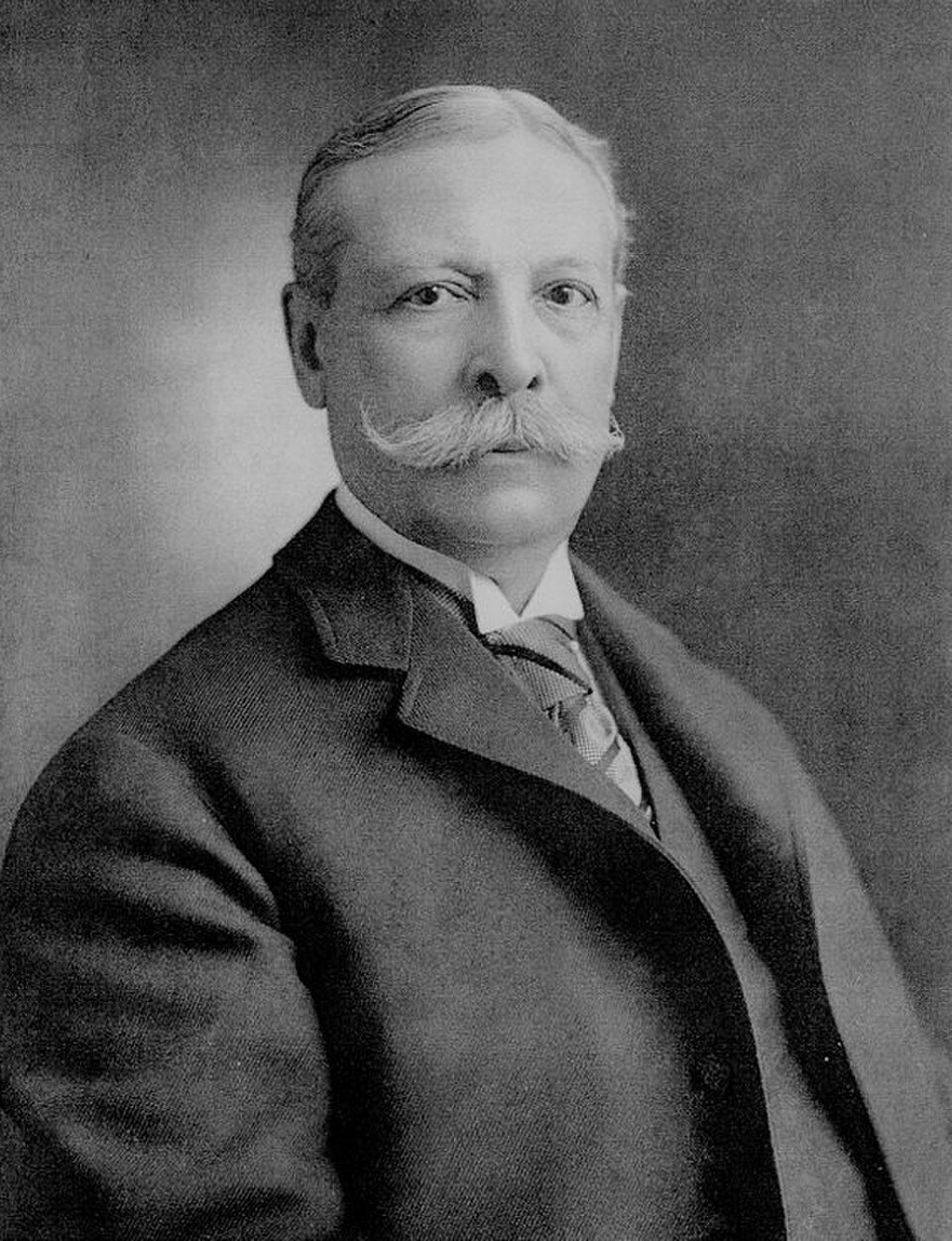
Yerkes’s impact was vast, and virtually immediate. He began work on three new lines that Londoners know today as the Bakerloo, the Northern, and the Piccadilly.
Then, almost as quickly as it began, his association with the underground railway ended. In the last week of 1905, roughly four years into his involvement with London’s transport network, Yerkes suddenly died. But his transformative work was all in place. Within the next two years, the new lines, all deep-level electrified services, opened for business.
Many historians of twentieth-century London are convinced that without Yerkes, the Underground – and therefore the city itself – would look very different.
A Certain Look
Few transport systems are as instantly recognisable as the London Underground.
Much of that identity can be traced to Frank Pick, who joined the Underground's publicity department in 1906 and later became one of the most influential figures in British transport design.
Pick believed that good design could make the network more attractive, accessible and easier to navigate.
Under his influence, the Underground developed a consistent visual identity, including the familiar red circle crossed by a blue bar. The roundel evolved from earlier station signs, eventually becoming one of the most recognisable logos in the world.
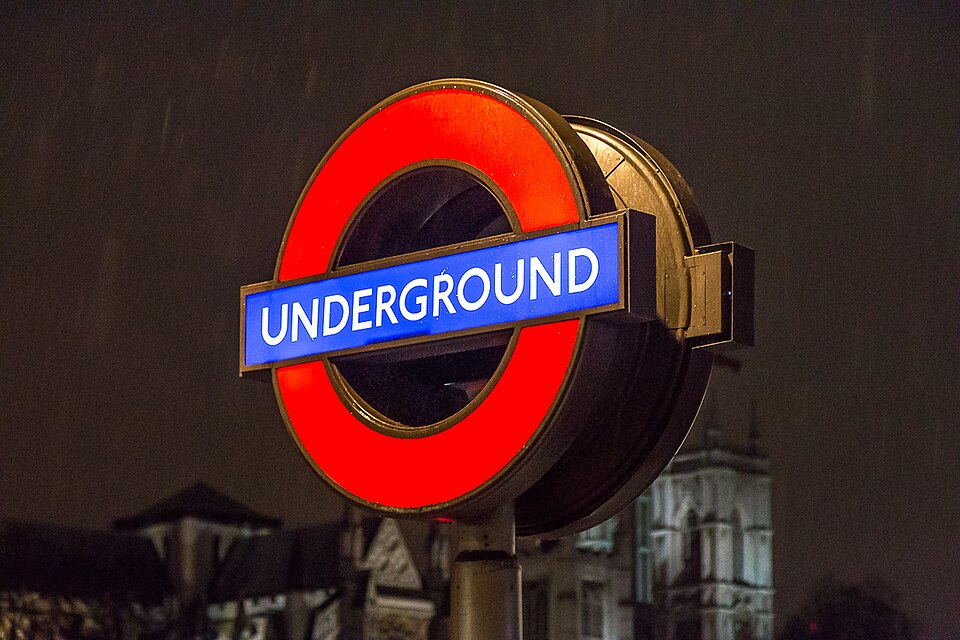
In the 1930s, architect Charles Holden was employed to lead the design of new stations. Inspired by European modernism, Holden followed principles of what he called simple, honest architecture. Often described as ‘brick boxes with concrete lids’, they featured a clean, modernist Art Deco look, generously punctuated with windows and prominently adorned with the now-famous Underground roundel.
Perhaps the Underground's greatest design innovation, however, came from a man named Harry Beck. In 1933, he created a revolutionary new map of the network. Instead of trying to reproduce London's geography accurately, he simplified the railway into coloured lines, clear connections and evenly spaced stations.
Beck made them diagrammatic rather than representational. His lines don't represent the actual paths; they represent the links between them. And that simplifies it.
Christian Wolmar, author of ‘The Subterranean Railway’
The result was so effective that Beck's basic approach remains in use today and has inspired transport maps around the world.
Metroland
As the transport system grew, city workers no longer needed to live in London. Quieter, greener suburbs became desirable places to live, away from the hustle and bustle of city life.
The Metropolitan Railway recognised an enormous business opportunity. By developing land near its stations, the company could attract new residents while creating a steady supply of passengers.
The company built large housing developments northwest of London, including Pinner, Wembley, and Neasden. Populations soared as sleepy villages became bustling suburbs, invigorated by rail stations.
In 1915, the Metropolitan marketing department coined a name for these suburbs: Metroland.
In the decades between the two World Wars, Metroland thrived. Leading graphic artists were recruited to create posters, newspaper adverts and pamphlets that are still considered classics of design and marketing. They sold Metroland as a rural idyll just a short train ride away from the beating heart of the capital.
In later years, the poet laureate John Betjeman wrote poems and made television documentaries extolling Metroland, though others ridiculed and demeaned this vision of suburbia as bland, soulless, and artificial.
Either way, Metroland's story is the clearest example of the London Underground’s full reach by the 1930s.
Tube Stations Became Lifesaving Shelters in the Blitz
In September 1939, the British government declared war against Nazi Germany, and London braced itself for bombardment from Adolf Hitler’s air force. Those who could built bomb shelters in their back gardens, and in poorer districts, the government erected communal brick shelters. But this still left swathes of the population without protection.
During the First World War, some Tube stations had served as shelters. But the government feared that repeating this could spread disease and lead to what it called “deep-shelter mentality”, making people reluctant to return to the surface.
Their message was clear: the Underground was not an impromptu air-raid shelter.
But once the havoc began, things quickly changed.
Starting in September 1940 and continuing for eight months, the Tube’s platforms and tunnels became vital places of refuge for countless Londoners during the Luftwaffe’s bombing raids.
At first, conditions were dreadful. Platforms were crowded, sanitation was inadequate, and there were few facilities for people spending entire nights underground. Nevertheless, the authorities eventually accepted that the stations would be used as shelters and began improving conditions. Bunks, toilets, medical facilities and food services were introduced.
By late 1940, around 79 stations served as shelters, with more than 15 miles of platforms and tunnels housing about 150,000 people spending nights beneath the streets.
In some stations, a real sense of community built up. Libraries, newsletters, and even a series of lectures were established. Above ground, buildings were destroyed, and fires illuminated the sky. Below, families slept on platforms, children played, and strangers shared food and conversation.
The Underground had become an unexpected lifeline.
Tens of thousands of lives were saved by being able to shelter in the Underground. It was a fantastic system.
Christian Wolmar, author of ‘The Subterranean Railway’